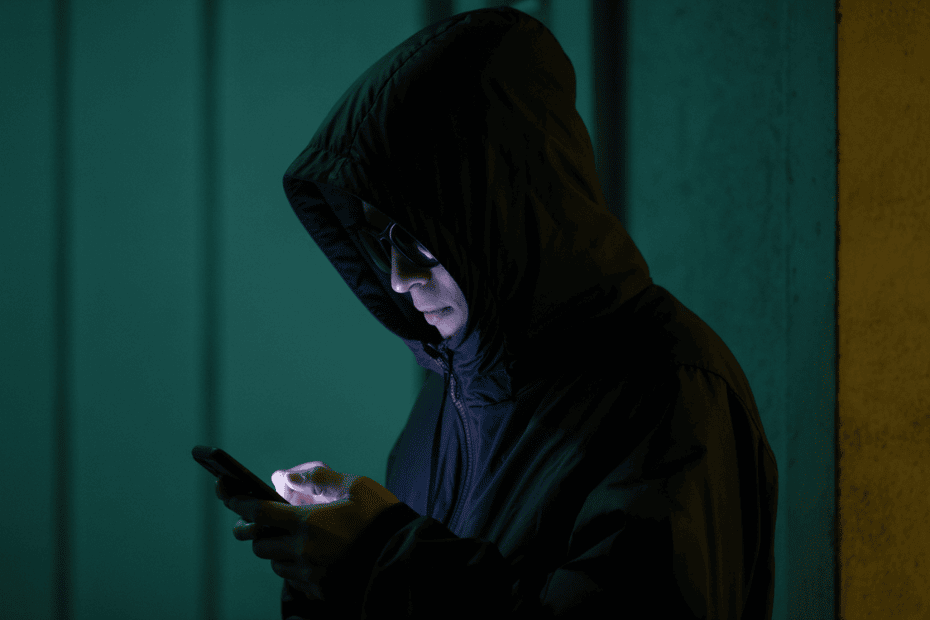
He held the second phone, the burner, in his palm. Cool, anonymous plastic. A completely different world to the device that chirped and buzzed with his everyday life. This one was a ghost.
The Unseen Fortress: Inside the World of Advanced OpSec for Discreet Men
The glow of the screen in the darkened room is the only confidante for some. It’s not just about switching browsers to an incognito window, or quickly clearing history after a late-night session. For a certain kind of man, discretion isn’t a casual afterthought; it’s a meticulous, ongoing construction. A fortress built pixel by pixel, signal by signal, designed to keep two worlds from ever colliding.
He scrolls, but not on his main device. That beautifully sleek smartphone, the one that holds his entire public existence – work emails that demand instant replies, family WhatsApp groups pinging with mundane updates, banking apps that track every legitimate penny – stays tucked away, silent and dormant for now. This other handset, the one he paid for with folded cash from a nameless corner shop miles from his usual orbit, that’s the key to a different door. It holds no contacts under real names, no apps linked to his known accounts, no stored Wi-Fi passwords from home or the office. It exists for a singular, tightly controlled purpose.
The Phone That Knows Nothing About You, And Tells No Tales
It often begins with the device itself, the physical tool of separation. The rise of the burner phone isn’t just a trope you see in gritty spy thrillers on television. For men orchestrating discreet meets across the UK, it’s a foundational layer of defence. A clean slate, a digital tabula rasa. No call history that could ever raise an awkward question, no synced accounts painting a picture of his other life, no innocent-looking app quietly hoovering up location data in the background.
You learn to treat it like a borrowed item, something that will be wiped clean with military-grade precision or even physically discarded when its purpose is served. The SIM card, too, is chosen with the same detached care – bought with loose change from a newsagent where his face is unknown, never registered to his name or address. It feels different in your hand, this piece of detached technology. Lighter, somehow. Less burdened by the weight of identity. It’s the digital equivalent of a perfectly fitting, utterly anonymous mask. Some men even have a rotation, ensuring no single burner stays active too long.
Whispering Down Encrypted Wires Where No One Else Can Hear
Then there are the apps. Forget the usual suspects, the mainstream social platforms that connect you with everyone you’ve ever known. Here, the currency is privacy, absolute and uncompromising. We’re talking about secure messaging apps, the ones that promise end-to-end encryption so robust that even their own developers purportedly can’t break it. Signal, with its reputation for austerity and security. Telegram, when used with its ‘secret chat’ functions, offering self-destructing messages that vanish like smoke. Wickr, perhaps, or Threema. These names get whispered, recommended in hushed tones within circles that understand what’s truly at stake.
It’s about creating a sealed channel, a digital confessional where words can be exchanged without the chilling fear of them echoing in unintended places, or worse, being subpoenaed from a server farm in a distant country. Conversations are often minimal, almost starkly functional. Arrangements are made with brevity, details confirmed, then chats are meticulously deleted, messages set to self-destruct within minutes of being read. The less said, the less there is to potentially find, to analyse, to misinterpret. It’s a stark, disciplined contrast to the endless, performative scrolling and sharing that defines so much of modern online life. Every tap, every send, is considered.
Erasing Shadows: The Phantom In The Photograph And The Data It Hides
And the pictures? That’s a whole other level of battlefield caution in this silent war for privacy. A carelessly sent photo, one that seems innocent enough, can unravel everything with devastating speed. It’s not just about avoiding a recognizable face, or a distinctive landmark casually caught in the background, though those are basic errors a seasoned practitioner would never make. It’s the invisible data buried deep within the image file itself – the EXIF data.
Most men have no idea it’s even there. Geotags pinpointing exactly where the photo was taken, often down to a few feet. Timestamps revealing the precise second. The make and model of the camera or phone used. Little digital footprints that can, with the right tools, tell a story you never intended to share. Men who are truly serious about this stuff, who operate at an advanced level of OpSec, know about EXIF data removal. They use specific tools or apps to meticulously scrub their photos clean, stripping away every shred of metadata before they’re ever uploaded or sent. Or they take pictures exclusively with the burner phone, perhaps using an app that doesn’t automatically store or embed such information. The image becomes just an image, detached from context, from place, from him. A fleeting glimpse, nothing more. A ghost in the machine.
The Browser Is Not Your Friend: Beyond Incognito Mode
Everyone knows about Incognito or Private Browse mode. A quick tap and your history isn’t saved locally. But that’s child’s play for those who understand the deeper mechanics of digital surveillance. True OpSec means understanding that your Internet Service Provider can still see where you’re going. It means knowing that cookies and trackers are far more persistent than a simple browser mode can handle.
This is where VPNs – Virtual Private Networks – enter the picture. Not just any free VPN, either, but paid services with strong no-logs policies, often based in countries with robust privacy laws. His connection is tunnelled, rerouted through servers across the globe, a digital detour that makes his true location a mystery before he even types a web address. Some will layer these, a VPN on top of the Tor browser, creating a labyrinthine path for their data that is exceptionally difficult to trace. It’s about building walls, then moats, then more walls. Temporary email addresses, created on the fly and discarded after use, become standard for any site registration. No link back to the real man.
Beyond The Digital: Real-World Precautions For The Tangible Meet
This meticulousness, this almost obsessive attention to detail, doesn’t magically end when the laptop lid is closed or the burner phone is powered down. It bleeds seamlessly into the physical world, into the planning and execution of the actual meet. Choosing locations is an art form in itself – neutral ground, always. Places away from usual haunts, neighbourhoods he rarely frequents, buildings with multiple exits. He learns to think like a counter-surveillance expert.
Varying routes to and from a location, never taking the same path twice in a row. Paying for everything in cash, avoiding cards that leave a clear paper trail. Being acutely, almost unnervingly aware of CCTV cameras – their angles, their blind spots. Observing who might be watching, who seems out of place. It’s a heightened state of awareness, a constant low hum of vigilance that becomes second nature. Not every man wants to swipe on a mainstream app and meet for a pint ten minutes later in his local, with his whole life story practically tattooed on his digital forehead. Some crave the intensity, the anonymity that allows for a different, perhaps more authentic, kind of exploration. These aren’t just hookup spots they head to; they are carefully chosen anonymous zones, temporary autonomous spaces where the usual rules don’t apply. The planning itself, the intricate dance of OpSec, becomes part of the ritual, part of the undeniable charge.
The Thin Line Between Paranoia and Prudence
Living this way, constantly assessing risks, meticulously covering tracks – it can sound like paranoia. And perhaps, for some, it teeters on that edge. But for many who engage in advanced OpSec, it’s born from a pragmatic understanding of consequences. They might have careers, families, public personas that would be irrevocably damaged by exposure. Or they may simply value their privacy with a fierceness that others find hard to comprehend in an age of oversharing.
It’s not always about hiding something “wrong.” Sometimes it’s about protecting something precious, something private, something that is simply no one else’s business. The protocols are a shield, allowing them to explore aspects of their sexuality or desires without jeopardising the other carefully constructed parts of their lives. It’s a constant calculation of risk versus reward, where the reward is the freedom to connect, however fleetingly, on their own terms, in a space they have made safe.
What They Seek In The Shadows: The Emotional Drive
What propels a man to invest so much time and energy into such elaborate precautions? It’s rarely just about the sex, though that’s undeniably a component. It’s often about control – the ability to dictate the terms of engagement, to manage one’s own narrative in a world that constantly seeks to define you. There’s an intellectual challenge to it, a satisfaction in outsmarting systems designed to track and categorise.
There’s the thrill of the clandestine, the allure of the forbidden, that can’t be denied. For some, it’s a way to feel intensely alive, navigating a high-stakes game where they set the rules. And beneath it all, there’s often a deep-seated need for validation, for a connection that feels real, even if it’s wrapped in layers of anonymity. In these carefully curated encounters, free from the baggage of everyday identity, some men find a more honest version of themselves, and of the intimacy they crave. The knowledge that it’s all insulated by their own diligence allows for a deeper surrender to the moment.
The Price and Prize of Utter Secrecy In A Connected World
There’s an undeniable emotional layer to this level of operational security, a quiet hum of constant vigilance. It can be isolating, a mental fortress that few, if any, are ever invited into. The need to compartmentalise so rigidly can take its toll. Friendships can feel superficial if this significant part of one’s life remains utterly hidden. But for those who master it, it’s also profoundly empowering. It’s about control in an uncontrolled world, carving out a space that is truly their own, untainted by external judgment or the prying eyes of an increasingly surveilled society.
It’s the quiet, almost visceral satisfaction of a plan perfectly executed, a digital trail gone cold, a physical encounter leaving no trace but the memory. These aren’t just casual encounters facilitated by clever tech; they are exercises in precision, in self-discipline, in a deep understanding of how information flows and how it can be contained. In these moments, these men are not just seeking a connection; they are orchestrating an absence, a deliberate void where their public and private selves never, ever collide. And in that controlled silence, in that self-created sanctuary, some find a unique, potent, and fiercely protected kind of freedom. The door remains closed, locked, and the key known only to them.
Lingering Thoughts From The Shadows
After pulling back the curtain on such a meticulous world, a few thoughts might still be circling. These aren’t about “what to do,” but more about “what it all means.”
1. This sounds like an incredible amount of effort. Is it really just about keeping things quiet, or is there more to it?
It’s rarely just one thing, is it? For some, the silence is golden, essential for protecting a life built elsewhere. For others, mastering this hidden world, the intricate dance of digital ghosts and real-world discretion, becomes a powerful draw in itself. It’s control, it’s a thrill, it’s crafting a space entirely on their own terms.
2. With all the apps promising easy connections, why would anyone choose such a complicated path with burner phones and encrypted chats?
Apps are one thing; true anonymity is another beast entirely. Every click, every swipe, can leave a trace, a breadcrumb. Men who walk this path often crave a level of detachment, a clean break that most platforms just aren’t built to provide. They’re not looking for easy; they’re looking for airtight.
3. Does living with this constant need for secrecy, this advanced OpSec, ever actually feel… isolating or exhausting?
There’s no denying the mental energy it demands. It’s a constant state of awareness, a second skin of caution. But for those who choose it, that vigilance can also bring a strange kind of peace – the reassurance that they’ve taken every step to protect what matters to them, or to access experiences they feel they can’t otherwise reach.
4. The article focuses heavily on the digital side. Is the “offline” aspect, the actual meet, managed with the same level of precision?
The mindset doesn’t just switch off when the screen goes dark. That same attention to detail, that awareness of surroundings and potential traces, it naturally extends to choosing the where and the how of any physical encounter. The goal is a seamless transition from digital shadow to physical ghost.
5. When all’s said and done, what’s the real pay-off for this high-stakes game of privacy?
Beyond the obvious discretion, it often comes down to a profound sense of agency. It’s the ability to explore desires, to connect, or simply to be, without the weight of judgment or the fear of exposure. In a world that watches so closely, creating a truly private space can be the ultimate act of self-determination.