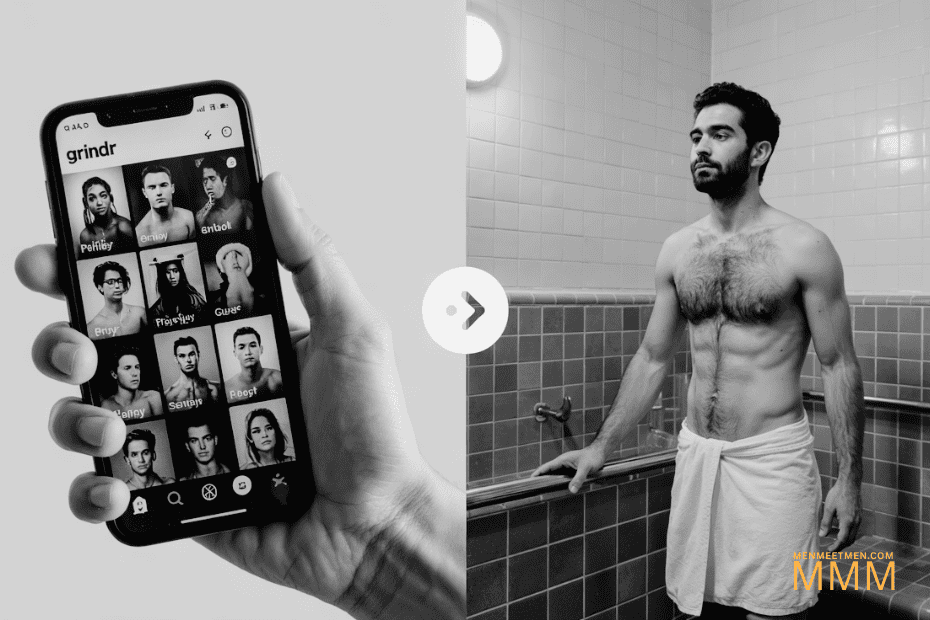
Listen to the Grindr vs Gay Saunas Digital Spark, Physical Steam Audio Deep Dive
Digital Spark, Physical Steam: Mastering the Grindr & Gay Sauna Synergy in the UK
The phone screen’s glow is a modern urban campfire, cutting through the gloom of a thousand London side streets, Manchester back alleys, Glasgow tenements. Fingers dance across glass, profiles flicker – a nightly ritual enacted across the UK. Grindr, that infamous grid mapping desire onto geography, still holds court in the queer digital realm. It’s the immediate interface, the catalogue of proximity, where the next encounter feels perpetually just around the corner, just a tap away. But for many navigating the complexities of connection, sex, and safety, the app isn’t the final destination. It’s the starting pistol. The endgame, increasingly, involves a calculated transition from the virtual scroll to the tangible, steamy anonymity of the gay sauna.
This isn’t merely about swapping one cruising ground for another. It’s about a synergy, a conscious blending of digital efficiency and physical sanctuary. Think of it less as a simple pipeline and more as a strategic pairing. Grindr and its digital brethren offer the reach, the initial spark, the convenience of filtering the city’s possibilities from your sofa. The sauna, meanwhile, provides the controlled environment, the established physical space designed for discretion and encounter, a necessary counterpoint to the inherent unpredictability of the purely digital hookup. This combination has become a defining feature of contemporary queer life in the UK’s sprawling urban landscapes. From the relentless 24/7 pulse of London’s Pleasuredrome to the shadowy corners of Steam Complex in Leeds, or further north in Blackpool’s established scene, these venues offer a crucial element the apps alone cannot: a physical container for desire, operating within a framework of assumed rules and relative safety. It’s about using the app smartly, as a tool to facilitate a move into a space perceived as more secure and fit-for-purpose than a stranger’s flat or a park after dark.
The Grid and Its Ghosts: Grindr as Tool, Not Tyrant
Let’s be clear: Grindr changed the game. Its impact on how gay, bi, and queer men meet is undeniable. It flattened geography, turning postcodes into playgrounds. The immediacy is its core appeal – the potential for connection, however fleeting, reduced to a few swipes and messages. In the UK alone, Grindr boasts a massive user base – figures from 2023 showed around 924,000 users, a significant chunk of the queer population logging serious hours (an average of seven per month, reportedly outstripping many mainstream apps). It’s a powerful tool for casting a wide net, for finding who’s nearby right now.
But power comes with pitfalls. The digital world is haunted by ghosts: fake profiles, misrepresented intentions, the nagging anxiety of data privacy breaches that have historically plagued the platform. Sharing your location, even masked, feels inherently risky. The potential for harassment, theft, or worse, particularly in areas where acceptance is thin on the ground, is a constant background hum. Grindr’s own safety guidelines are a tacit admission of these dangers. Users become adept at navigating this landscape – the pre-meet vetting rituals, the demand for video call verification, the strategic vagueness of profiles, the safety net of pinging your live location to a mate.
Key Takeaway: Grindr offers unparalleled reach and immediacy for initiating contact, making it a potent tool. However, inherent risks around safety and authenticity often lead users to seek controlled physical environments like saunas for the actual meet-up, leveraging the app as a facilitator rather than the final step.
The app is a starting point, a facilitator. It connects, it filters, it initiates. But the transaction often requires a different kind of space to reach completion, one that mitigates the digital world’s inherent vulnerabilities.
Steam and Sanctuary: The Enduring Role of the Sauna
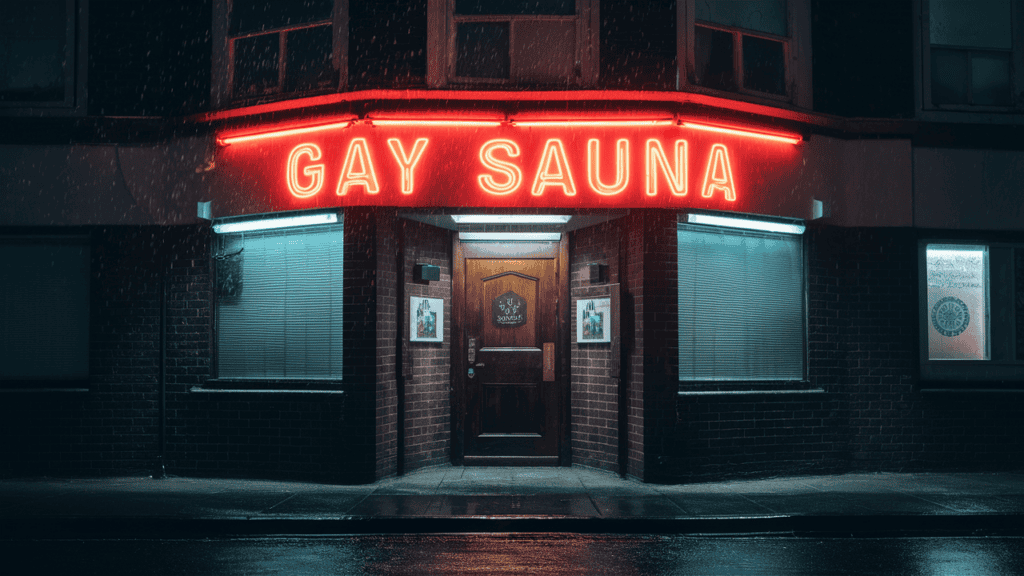
Gay saunas are institutions, woven into the fabric of queer history long before smartphones existed. They’ve evolved from clandestine bathhouses to established, legally operating social and sexual hubs across the UK. Their endurance isn’t just nostalgia; it’s functional. They offer a specific solution to the challenges of queer intimacy. Entry typically requires proof of age, often adhering to a Challenge 25 policy, and sometimes a nominal, discreetly handled membership process. This immediately establishes a baseline – everyone inside is an adult male who has actively chosen to be in that specific, queer-centric environment.
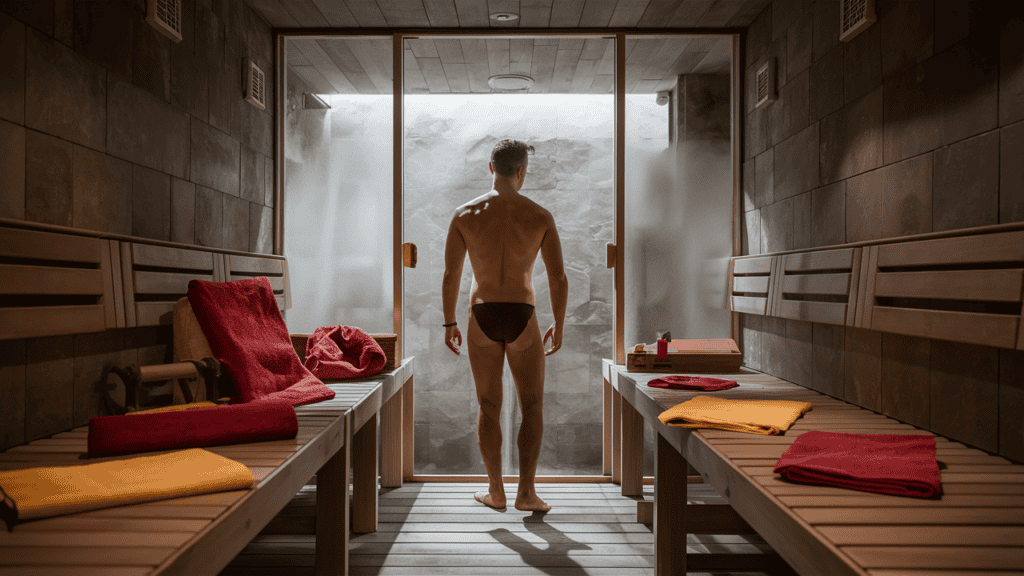
Inside, it’s a deliberate departure from the outside world. Towels create a uniform anonymity. Lockers secure belongings (though seasoned users know to keep valuables minimal). Dim lighting, labyrinthine layouts, steam-filled rooms – it’s all designed for discretion. Facilities vary, from the expansive complexes like London’s Pleasuredrome with its pods and treatment rooms, or Sweatbox’s gym-sauna hybrid, to more functional regional spots catering to local communities. The recent green light for a new sauna in Leeds underscores their continued relevance. Crucially, they provide dedicated spaces – private cabins, darkrooms, communal play areas – where sexual encounters are not just possible, but expected and catered for. This removes the ambiguity, the potential awkwardness or danger, of navigating hookups in private homes or public spaces.
Key Finding: UK gay saunas provide legally operating, age-controlled spaces specifically designed for social and sexual encounters among men, offering a level of discretion, shared understanding, and safety infrastructure (like readily available condoms and lube) that complements the initial connection often made via apps.
They function as sanctuaries built on implicit codes of conduct and explicit safety provisions. Free condoms and lubricant are standard issue, a legacy of community-led sexual health advocacy. Some venues even host sexual health services, offering STI testing or information on PrEP. This health-conscious infrastructure adds another layer of reassurance, a stark contrast to the often-unspoken risks of casual encounters arranged solely through apps. Security staff and CCTV are common features, providing a further sense of oversight.
Bridging the Gap: From Digital Chat to Physical Encounter
The process of moving from app to sauna is often a smooth, almost choreographed transition, a practical application of using both tools in concert:
- The Digital Scan: Late night, post-pub, or just a Tuesday evening. The grid calls. Filters narrow the field. Proximity is often key, but so is intent. Who’s nearby and potentially heading sauna-ward?
- The Initial Contact: Messages fly. Pics are exchanged – the usual dance of torsos and shadowed faces. The vetting begins. Are you real? What are you looking for? A quick video call might happen here, a crucial step recommended for verifying identity before committing to a physical meet.
- The Strategic Suggestion: The conversation shifts. “Fancy meeting?” Instead of the potentially fraught “Your place or mine?”, the sauna emerges as a neutral, purpose-built suggestion. “Meet at [Sauna Name]?” or checking proximity “You near [Sauna Name]?”. It’s efficient code, signalling intent and offering a space designed for the purpose, reducing perceived risk compared to a private residence. Sometimes, the plan might even involve a brief public meet-up nearby first, just to gauge vibes before entering the sauna environment together.
- The Separate Arrivals: Often, users arrive independently. Pay the entry, get the towel, secure belongings. The shedding of street clothes is also the shedding of some digital-world anxieties, entering a space with different rules. Informing a friend of your location remains a wise precaution.
- The Physical Scan: Inside, the search resumes, but in analogue. Navigating the steam rooms, corridors, jacuzzis. Maybe you spot the guy from the app, maybe not. The sauna has its own internal ecosystem; the app connection might be the catalyst, but the physical space offers its own opportunities. The initial Grindr plan might evolve or be superseded entirely by encounters within the venue.
- The Encounter (If It Happens): The sauna provides the infrastructure – a cabin, a quiet corner. Discretion is the default. Encounters can be fleeting, intense, often non-verbal. Afterwards, a shower, back into the world, the transition complete.
This integrated approach directly addresses common anxieties. Fear of rejection? The sauna is an environment geared towards cruising and connection. Worries about bringing a stranger home? The sauna is neutral territory. Concerns about public exposure? Saunas offer a bubble of privacy. Fear for physical safety? While no space is entirely risk-free, saunas offer staff, established rules, CCTV, and a degree of mutual understanding often absent in purely app-arranged private meets. Bringing your own protection (condoms, lube) is still advised, taking personal responsibility alongside the venue’s provisions.
Navigating the Real World: Consent, Community, and Complications
This synergy isn’t a magic bullet. The sauna environment, while controlled, demands vigilance. Consent remains paramount, and navigating desire in low-light, often non-verbal settings requires careful attention to signals and boundaries. Trusting your gut is crucial. If a situation feels wrong, the exit is always an option. Reporting concerns to staff is important for maintaining the space’s integrity. Staying aware and avoiding excessive impairment from drink or drugs is key to maintaining control.
It’s also vital to remember these spaces are more than just hookup spots. They are complex social environments. Regulars form bonds, communities coalesce in the steam. For some, particularly older men or those disconnected from the mainstream bar scene, saunas provide a vital social lifeline, a place for conversation and relaxation as much as sex. Themed nights or events further foster this sense of community.
The COVID-19 pandemic temporarily disrupted this ecosystem, forcing closures and new protocols. But the adaptation – enhanced cleaning, capacity limits, focus on air quality – highlighted the resilience and importance of these physical spaces. Their role as established community hubs was even recognised in discussions about using them for health initiatives like vaccinations.
Beyond the Binary: Apps and Saunas as Allies, Not Alternatives
Focusing solely on the potential downsides – the body image pressures amplified by apps that can persist in saunas, the occasional security lapse, the inherent vulnerability of seeking anonymous encounters – misses the bigger picture. The combination of apps like Grindr and physical venues like saunas represents a pragmatic, sophisticated adaptation to the realities of seeking connection and intimacy in the modern world.
It acknowledges the efficiency of digital tools while respecting the need for physical safety and discretion. It’s not about choosing one over the other; it’s about understanding how they complement each other. Grindr casts the net wide; the sauna provides a specific, controlled environment for potential catches. This dual approach leverages the strengths of both digital reach and physical infrastructure. Research and anecdotal evidence confirm this trend: many UK gay and bi men use apps specifically to arrange meets at saunas, seeing it as a safer, more convenient option than other alternatives.
This integrated strategy speaks volumes about ongoing societal factors. The need for such distinct spaces hints at lingering concerns about public visibility, judgment, and safety for queer men. In an ideal world, perhaps the boundaries would be more blurred. But in the UK today, the Grindr-to-sauna route offers a practical, widely understood, and relatively secure pathway.

The Future is Hybrid: Embracing the Synergy
Technology will continue to evolve. New apps will rise and fall. Social norms will shift. But the fundamental human need for connection – sexual, social, or otherwise – remains. Grindr, despite its flaws, endures as a powerful tool for initiating that connection. Gay saunas, with their deep roots and specific function, provide the physical architecture for it to unfold with a degree of managed risk and anonymity.
Calling them a “perfect duo” might be hyperbole; perfection is rare in human affairs. But the synergy between the digital reach of apps and the physical sanctuary of the sauna is undeniable. For a vast number of gay, bi, and queer men across the UK, this combination isn’t just an option; it’s a smart, effective strategy. It’s a modern ritual of connection, born from the marriage of technology and tradition, playing out nightly behind steamed-up windows in cities across Britain. It’s raw, it’s real, and it represents a sophisticated navigation of desire in the 21st century. The grid continues to glow, the steam continues to rise, and the savvy user leverages both.
Looking for more ways to Meet Men Near You?
Featured Discreet Places To Meet Men: